Language Rights of the Hungarian Community in Transcarpathia Must Be Upheld in Practice
2026. 10. 09.
The Hungarian community in Transcarpathia was at the centre of discussions at a meeting of the European Parliament’s Intergroup on Traditional Minorities, National Communities and Languages (Minority Intergroup) during the October plenary session. The initiative entitled “Cross-Border Language Accessibility in Public Life” was implemented through a Hungarian-Ukrainian-Romanian partnership, with professional coordination provided by the Antal Hodinka Research Centre for Linguistics of the Ferenc Rákóczi II Transcarpathian Hungarian University. The project aims to promote the effective exercise of minority rights, particularly the use of minority languages in public life and public services, while also encouraging cross-border economic cooperation by building on linguistic diversity.
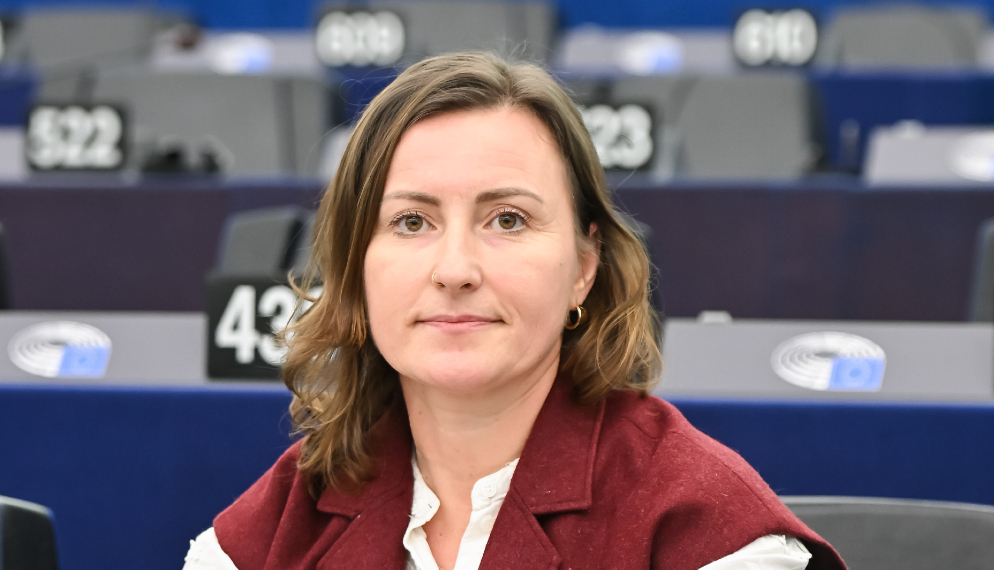
Speaking at the presentation of the project, Viktória Ferenc, MEP of Fidesz–KDNP and a member of the Patriots for Europe Group, stated: “I was delighted to propose the presentation of this successful project here at the European Parliament, as the use of their mother tongue is essential for Transcarpathian Hungarians to preserve their national identity. It is also a fundamental prerequisite for their ability to thrive in everyday life and in their homeland. The project clearly demonstrates the tangible benefits of ensuring that in a multi-ethnic and multilingual region, all national communities have genuine opportunities to use their mother tongues in public life and when accessing public services. This is why it is essential that the legislation currently being drafted in Ukraine provides adequate and lasting guarantees for the exercise of national minorities’ language rights, and that these rights are effectively upheld in everyday life.”
Kornélia Hires-László, Director and Researcher at the Antal Hodinka Research Centre for Linguistics and lecturer at Ferenc Rákóczi II Transcarpathian Hungarian University, explained that the grassroots initiative implemented despite the challenges posed by the war was based on extensive sociological data collection and the active involvement of local communities. Supported by the Interreg programme, the research conducted in Ukraine, Hungary and Romania sought to examine how the communities concerned experience multilingualism, what obstacles they face in exercising their language rights, and how the use of minority languages can be encouraged in everyday life. One of the initiative’s key messages is that multilingualism should not be regarded as an administrative burden or an obstacle, but rather as a social, cultural and economic asset that can benefit local communities and the wider region.
Following the meeting of the Minority Intergroup, Ildikó Orosz, President of Ferenc Rákóczi II Transcarpathian Hungarian University and the Transcarpathian Hungarian Pedagogical Association (KMPSZ) emphasised that the research presented was particularly timely, as a draft law concerning the rights of national minorities, including mother-tongue education, could be placed on the agenda of the Ukrainian Parliament on 12 October. The adoption of this legislation could represent an important step towards restoring the rights of the Hungarian community in Transcarpathia. However, its adoption alone would not guarantee that minority rights are effectively upheld.
“Ensuring minority rights requires three essential elements: adequate and comprehensive legal guarantees, their consistent implementation in practice, and communities that are aware of their rights and feel confident in exercising them. Even the best legislation is of little value if its provisions are not implemented in everyday life, or if those concerned do not feel that they can safely exercise the rights and opportunities afforded to them. I am grateful to Loránt Vincze, Chair of the Minority Intergroup for placing this initiative of great importance to the Hungarian community in Transcarpathia on the agenda. Thanks to this opportunity, Members of the European Parliament were able to hear a first-hand account of this important issue,” Viktória Ferenc emphasised.